PrototypeComing soon

YUKE FCU-6C

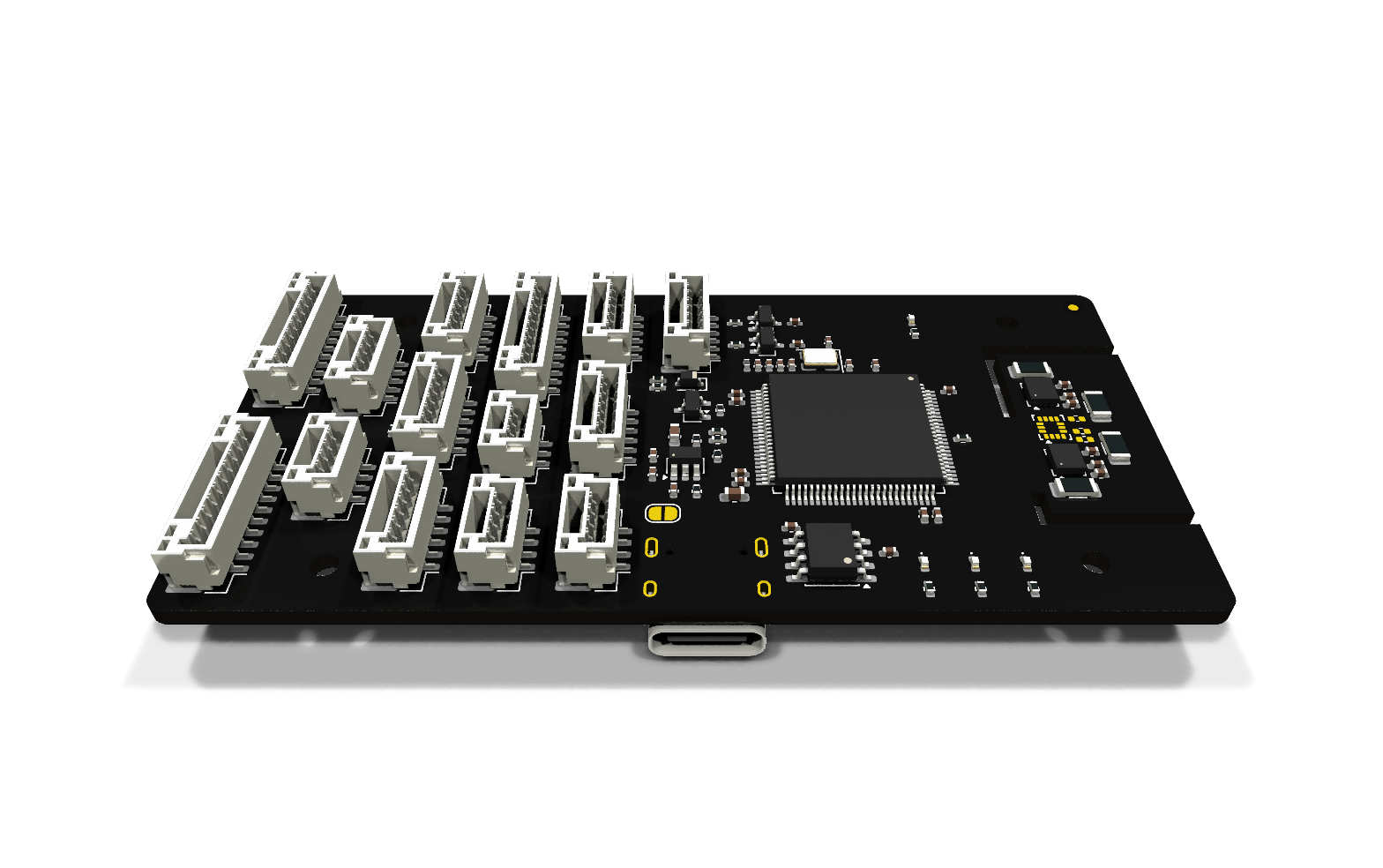
Pixhawk 6C-class ArduPilot flight controller: STM32H743 + IOMCU, ST and Bosch dual IMUs, 2× CAN FD, 16 PWM outputs and redundant power inputs.

YUKE FCU-6C

YUKE FCU-6C is a full-featured flight controller built on the Pixhawk 6C (FMUv6C) architecture and designed for ArduPilot. An STM32H743 main processor works alongside an STM32F103 IO coprocessor. Two IMUs from different vendors (LSM6DSK320X and BMI270) sit on a heated IMU island held at 45 °C, with an ICP-20100 barometer and an MMC5983MA magnetometer completing the sensor set. A six-layer PCB, two CAN FD buses, microSD logging and JST-GH connectors keep the same wiring from the bench to the field.

Specifications

Processor
STM32H743VIT6 · Cortex-M7, up to 480 MHz · 2 MB flash
IO coprocessor
STM32F103C8T6 (IOMCU)
IMU
LSM6DSK320X (ST) + BMI270 (Bosch), SPI · heated IMU island at 45 °C
Barometer and compass
ICP-20100 · MMC5983MA
Serial ports
6× UART (TELEM1–3, GPS1–2, debug) · USB-C
Buses and logging
2× CAN FD (TJA1051T/3) · 3× I2C · microSD (4-bit SDMMC)
PWM outputs
16 channels: 8× FMU (bidirectional DShot) + 8× IO
RC
PPM/S.BUS input, RSSI · separate S.BUS output
Power
2× 5 V power-module inputs (TPS2121 redundant selection) · USB-C backup power
Mechanical
41.0 × 81.8 mm · 6-layer, 1.6 mm PCB · 4× M2
Firmware
ArduPilot · YukeFCU6C target
Availability
Prototype, coming soon

This board is not on sale yet

This board is in the prototype stage. Ask us to let you know when the first production batch is ready, or write to us for samples, volume or custom versions.

The buttons open your email app. You can also write directly to [email protected]

Variants

Rev A prototypeYK-FCU6C-A
PrototypeLead time: Coming soon

Compatibility

Software and interfaces this board is designed to work with. Test results are added to the docs as they come in.

  • ArduPilot
  • Pixhawk 6C (FMUv6C) architecture
  • DroneCAN / CAN FD
  • MAVLink telemetry

Design notes

Board architecture and design choices. Values are design targets and are updated as bench and flight tests confirm them.

Architecture

Two-processor layout with FMU and IOMCU

Like Pixhawk 6C-class controllers, FCU-6C separates the flight software from the output layer. The STM32H743-based FMU runs ArduPilot while an STM32F103 IOMCU manages a separate output bank, spreading 16 PWM channels across two independent processors.

  • FMU: Cortex-M7, up to 480 MHz, 2 MB flash and 1 MB RAM; parameters are stored in flash.
  • The 8 FMU outputs support bidirectional DShot; the 8 IO outputs are driven through the IOMCU.
  • Separate SWD/debug test pads for the FMU and IOMCU sit on the bottom side, including the FMU debug UART.
Sensing

Heated IMU island and vendor diversity

The two IMUs come from different vendors: ST LSM6DSK320X and Bosch BMI270. Both sit on an island separated from the rest of the board by two 1.2 mm routed slots, where a MOSFET-switched resistor heater holds a 45 °C target.

  • IMUs from different vendors add diversity against common-cause sensor faults.
  • A fixed operating temperature reduces calibration drift with ambient conditions.
  • An ICP-20100 barometer and an MMC5983MA magnetometer sit on the internal I2C bus, and the board reserves a footprint for a third IMU.
Power and connectivity

Redundant power and two CAN FD buses

Two power-module inputs are selected automatically by a TPS2121, and a TPS2116 runs the board from USB-C when no power module is present. The 5 V rails to peripherals are software-switched and each is limited to 1.29 A.

  • 2× CAN FD: TJA1051T/3 transceivers, NUP2105L ESD protection and selectable 120 Ω termination.
  • 6 UARTs (TELEM1–3, GPS1–2, debug), 3 I2C buses and 4-bit microSD logging.
  • Six-layer, 1.6 mm PCB with JST-GH connectors; the 41 × 81.8 mm board mounts with four M2 holes.

Setup and docs

Port maps, wiring and setup guides for this board.

Tutorial9 min read

First ArduPilot setup on the FCU-6C

Loading firmware, connecting with Mission Planner or QGroundControl, frame and port settings, then accelerometer, compass and radio calibration once the heater has settled.

Read more